- Ananya Joshi, Kaushik Kumar, Leena Rupani & Shreyansh Singh
What if the plant choking India's rivers could power your next diary or handbag?
 Water hyacinth or Eichhornia crassipes (locally known as Jal Kumbhi) is often described as a plant that grows faster than your to-do list. Native to the Amazon Basin in South America, it was originally introduced to Indian water gardens in the late 19th century by British colonialists and botanical enthusiasts. For its striking purple flowers, it has since evolved into a major environmental challenge.
The Unseen Consequences of Water Hyacinth Invasion
1. It forms a dense mat that harms aquatic life and ecosystems as it blocks sunlight and oxygen. Studies by the Central Inland Fisheries Research Institute show that the biomass from water hyacinth can reach 200 tonnes a hectare, suffocating native species.
2. It also hampers activities like fishing, boating, and local transportation. In Assam, nearly 30% of fishing activity is disrupted during peak infestation months.
3. It also fosters mosquito breeding in stagnant waters.
4. It disrupts the balance of aquatic biodiversity.

According to the Indian Agricultural Research Institute, water hyacinth spreads at a rate of nearly 2 hectares per day in some riverine ecosystems. It has impacted major water bodies like Loktak Lake in Manipur and the Dal Lake in Kashmir, where aquatic life and tourism have taken a hit. Clogged rivers and ponds in places like Varanasi are a daily reminder of the unchecked growth of this plant.
Besides, each kilogram of dried water hyacinth used in production can replace up to 700 grams of plastic-based material that would otherwise have been used. Additionally, a life-cycle assessment by the International Journal of Life Cycle Studies found that hyacinth-based products emit 40–50% less CO₂ compared to plastic alternatives.
Sustainable Style for Everyday Living
Water hyacinth, known for its rapid spread and invasive nature, is often seen as a nuisance to the ecosystem. However, this aquatic weed is now at the heart of an emerging sustainability movement. Globally, countries like Thailand and Kenya have successfully created small industries around water hyacinth. In Thailand, entire communities in Pathum Thani earn sustainable livelihoods weaving baskets and mats for export. Similarly, Kenyan women-led co-operatives in Kisumu craft furniture and earn up to $100 monthly from sales.
According to the National Institute of Ecology, India loses thousands of hectares of freshwater annually due to water hyacinth infestation. Instead of treating it solely as waste, ScrapShala reimagines it as a resource.
Waste to Wealth: How Far Can Water Hyacinth Go?
Water hyacinth contains up to 50% cellulose and has a high rate of biomass generation, doubling every 5–12 days under favourable conditions. According to a 2023 report by TERI (The Energy and Resources Institute), Indian water bodies collectively produce an estimated 2.5–3 million metric tonnes of water hyacinth annually. Yet less than 1% of this is utilized effectively. If harnessed at scale, this invasive weed could serve as a:
· Raw material for biodegradable packaging and paper
· Base for natural fibre composites used in automotive interiors
· A feedstock for biogas and bioethanol production
· Compost additive and organic fertilizer due to its high potassium and nitrogen content. Improving soil texture & crop yields by up to 12% as found in pilot trials.
Research & Innovations in India
India’s top scientific institutions are leading the way in transforming water hyacinth into eco-solutions:
IIT Guwahati
· Developed various methods to extract cellulose from hyacinth for bioethanol production.
· Supports renewable fuel goals and reduces heavy reliance on fossil fuels.
CSIR-NEERI (National Environmental Engineering Research Institute)
Innovated techniques & methods to convert water hyacinth into bio-coal pellets:
· These carbon-neutral fuel pellets burn like coal but emit lesser pollutants.
· Ideal for rural and peri-urban energy needs.
· Helps prevent open dumping and methane emissions from decaying hyacinth.
Fun fact: Water hyacinth, when mixed with natural adhesives, can serve as a sustainable alternative to MDF and plywood products, reducing wood demand and deforestation
The Appeal of Sustainability in Every Detail
Eco-Friendly:
· Completely biodegradable and non-toxic.
· Helps restore aquatic ecosystems by controlling overgrowth.
· Minimizes use of plastics and synthetic materials.
Affordable Sustainability:
· Abundantly available raw material keeps manufacturing costs low.
· Manual processing makes it viable for small-scale production.
· Offers conscious consumers eco-friendly choices without a heavy price tag.
Uniquely Beautiful:
· The earthy tones and coarse textures give every piece a naturally elegant finish.
· Each product carries a handmade charm that stands out in a world of mass production.
· Perfect for people who value both style and sustainability.
Climate Advantage:
· Water hyacinth decomposes fully within 2-3 months under natural conditions, enriching the soil with macronutrients, essential for aquatic plant growth.
· Harvesting it helps restore oxygen levels and reduce methane formation in stagnant ponds.
Turning Water Hyacinth Waste into Ethical and Eco-Friendly Product
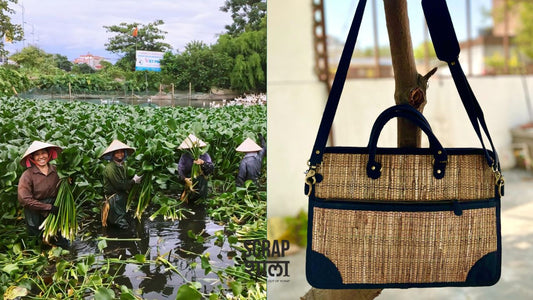
Instead of waging war on water hyacinth, organisations such as ScrapShala are embracing innovation and sustainability by turning this invasive species into stylish and functional products. Through thoughtful harvesting and careful drying, the stems and leaves of water hyacinth are transformed into durable, biodegradable fibres.
These natural strands can skillfully woven into everyday essentials such as wearable accessories, baskets, diaries, art surface, furniture and much more.
Each item represents a blend of creativity, functionality, and responsibility. It’s not just about recycling - it’s about reimagining what’s possible.
The Making Process: From Pond to Product
Step 1 - Harvesting
Water hyacinth is carefully harvested by hand from local lakes, rivers, and ponds to prevent disruption of aquatic ecosystems. This step not only clears clogged waterways but also provides the foundational material for sustainable product creation.

Step 2 - Drying & Fiber Preparation
The harvested plants are sun-dried for several days to eliminate moisture naturally. Once dried, they are processed into thin, flexible fibers, the essential base for crafting eco-friendly items.
 Step 3 - Weaving & Crafting
Using traditional Indian coiling and braiding techniques, skilled artisans weave the fibers into unique products. Natural adhesives and dyes like turmeric or indigo are used, keeping the process entirely chemical-free and carbon-light.
 Impact Beyond the Product: Environment & Communities
Utilizing water hyacinth helps restore aquatic ecosystems by reducing the plant’s overgrowth. It also supports local economies by providing jobs to artisans and communities involved in the harvesting and production processes.
India’s G20 Presidency and Mission LiFE (Lifestyle for Environment) initiatives have amplified the push for sustainable production models. Water hyacinth, if integrated into government schemes like MGNREGA, NRLM, and PMFME, can be a viable biomass resource for India’s rural green economy.
This incredible journey of water hyacinth from an invasive, annoying weed to eco-friendly products is proof of human creativity and responsibility towards the environment. This effort also has the potential to rejuvenate old ponds in Varanasi and the outskirts. By choosing these products made from water hyacinth at Scrapshala, Varanasi, consumers contribute to a more sustainable world, one product at a time.
A Founder’s Vision: Turning Waste into Worth
When ScrapShala’s founder, Shikha Shah, first noticed the tangled mat of water hyacinth choking local pond, including Lahartara Pond, Durga Kund and Lakshmi Kund in Varanasi, it bothered her. What was once seen as a wild, invasive weed revealed an unexpected strength, its natural beauty, resilience, and texture made it the perfect candidate for thoughtful, sustainable product creation.
At ScrapShala, we're pursuing the straightforward yet impactful notion that even an underappreciated weed, like water hyacinth, may serve as the basis for sustainable, meaningful design because of its inherent strength, organic texture, and earthy elegance.

Coming Soon: A Water Hyacinth Collection That Makes a Difference
Get ready for a beautiful new range of products crafted from water hyacinth leaves, each one reflecting core values of sustainability, functionality, and artisan empowerment. Whether it’s a thoughtful gift, a work essential, or a piece of home décor, every item brings together Indian tradition and mindful innovation.
By choosing this collection, you’re not just buying a product; you’re helping clean up water bodies, supporting artisan livelihoods, and embracing a planet-friendly lifestyle. Let’s turn the tide on waste, one water hyacinth creation at a time.